
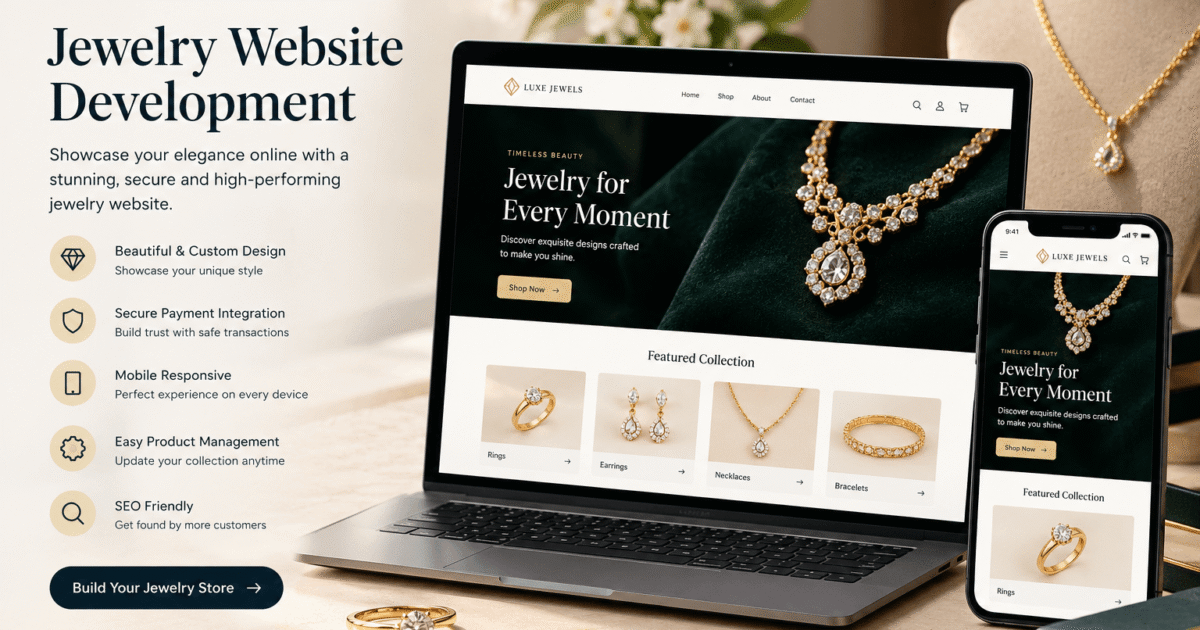
Selling jewelry online is nothing like selling it in a shop. When someone walks into your store, they can hold a ring, feel its weight, watch it catch the light. Online, none of that exists. All you have is your website. So if your site loads slowly, looks messy, or doesn’t build trust in the first few seconds, people leave without a second thought.
That’s why jewelry website development isn’t just about making something that “looks nice.” It’s about building a store that actually convinces someone to spend money on something they can’t physically touch before buying. In this post, we’ll go through the features that separate a jewelry website that sells from one that just sits there looking pretty.
Why Jewelry Websites Need Special Attention
Jewelry is what you’d call a “high consideration” purchase. Nobody buys a diamond necklace the way they buy a phone case. There’s more thought, more doubt, more back-and-forth before the “buy” button gets clicked. A generic online store template built for, say, selling t-shirts, just won’t cut it here.
This is exactly why working with a dedicated jewelry website development company makes such a big difference. It’s not about having a website it’s about having one built specifically around how people shop for jewelry: slowly, carefully, and with a lot of visual reassurance along the way.
Core Features Every Jewelry Website Needs
High-Quality Zoomable Product Images
This is non-negotiable. People want to see the sparkle, the cut, the little details on the band. A blurry photo or a single low-res image kills trust instantly. Zoom-in functionality, multiple angles, and even 360-degree views go a long way in making someone feel confident about what they’re buying.
Clear and Honest Product Descriptions
Metal type, carat weight, gemstone details, sizing all of it needs to be laid out clearly, without jargon that confuses a first-time buyer. Good jewelry e-commerce website design and development always keeps the shopper’s understanding front and center, not just SEO keyword stuffing.
Simple, Trustworthy Checkout Process
Nobody wants to enter their card details on a page that feels sketchy. A clean checkout flow, visible security badges, and multiple payment options (cards, UPI, wallets, buy-now-pay-later) reduce the chances of someone abandoning their cart at the last step.
Mobile-Friendly Design
A huge chunk of jewelry shopping today happens on phones, often during a lunch break or while scrolling in bed. If your site isn’t smooth on mobile, you’re losing sales without even realizing it.
Virtual Try-On or Ring Size Guide
Not every store has the budget for AR try-on tools, but even a simple, well-designed ring size chart or bracelet measuring guide helps buyers feel less unsure about ordering the right size.
Certification and Authenticity Display
Especially for diamonds and gold jewelry, showing certification (like GIA or BIS hallmark) builds instant credibility. People want proof they’re not being sold something fake.
Why Hire a Specialized Agency Instead of a Generic Web Developer
You could go with any random web developer, sure. But jewelry has its own quirks trust signals, visual-heavy layouts, complex product variations (size, metal, stone), and often high price points that make buyers extra cautious.
A skilled jewelry website development agency understands these nuances already. They’re not learning on your dime. They know what layout works for engagement rings versus what works for everyday fashion jewelry, and they know how to structure category pages so browsing feels natural instead of overwhelming.
What Good Jewelry Website Development Services Actually Include
When you’re evaluating jewelry website development services, here’s what should typically be on the table:
- Custom design based on your brand, not a copy-paste theme
- SEO-friendly site structure from day one
- Fast loading speed (jewelry images are heavy, so this matters a lot)
- Easy admin panel so you can update products without needing a developer every time
- Integration with payment gateways, shipping partners, and inventory tools
- Basic analytics setup so you know what’s actually selling
If an agency skips most of these, it’s worth asking why.
SEO Considerations for a Jewelry Store Website
Getting traffic is one battle. Converting that traffic is another. A well-planned jewelry store website development process bakes SEO into the foundation proper URL structure, optimized product titles, alt text for images, and fast page speed. Jewelry is a visually driven category, so image SEO especially cannot be an afterthought.
Local SEO matters too, especially if you also run a physical showroom. Location-based keywords, Google Business Profile integration, and city-specific landing pages can bring in nearby buyers who prefer to see the piece in person before finalizing.
Common Mistakes Jewelry Store Owners Make Online
A lot of jewelry brands rush into building a website without thinking it through. Some common slip-ups:
- Using stock photos instead of real product shots
- Ignoring mobile experience completely
- No clear return or exchange policy visible
- Overcomplicated navigation with too many categories
- Slow-loading pages because of unoptimized images
Fixing these doesn’t require a massive budget just some planning before the site goes live.
Conclusion
Building a jewelry website isn’t just a design exercise it’s about creating an experience that replaces everything a physical store offers: trust, detail, and reassurance. From high-quality images to a smooth checkout process, every feature plays a role in whether a visitor becomes a paying customer.
Whether you’re starting from scratch or upgrading an existing store, thinking through these essentials early will save you a lot of rework down the line. And if you’re not confident about handling the technical side yourself, partnering with a team that understands the jewelry business specifically will usually save both time and money in the long run.
Frequently Asked Questions
1. How long does it take to build a jewelry e-commerce website?
It usually takes anywhere from 4 to 8 weeks, depending on how many features you need and how much custom design work is involved.
2. Do I need a mobile app along with a website?
Not necessarily. A well-built, mobile-responsive website covers most of what a small-to-mid-sized jewelry business needs. An app can come later once your online traffic grows.
3. How much does jewelry website development cost?
It varies a lot based on design complexity, number of products, and features like AR try-on. A basic but solid store can start modestly, while a fully custom build with advanced features will cost more.
4. Can I sell customized jewelry pieces on my website?
Yes, and it’s actually a great feature to offer. You’ll just need a product configurator or a request-a-quote system built into the site for custom orders.
5. Is SEO included in website development, or is it separate?
Basic on-site SEO (structure, speed, alt text) should be part of development. Ongoing SEO like content marketing and link building is usually a separate, continuous service.
6. What payment options should a jewelry website support?
At minimum, credit/debit cards, UPI, and net banking. Adding buy-now-pay-later options can also help with higher-priced items where customers hesitate to pay the full amount upfront.